반응형

1. 출발물질과 생성될 입체이성질체 종류
- 예시: (R)-4-methyl-1-hexene은 C4에 R 카이랄 중심을 가짐.
- 산 촉매 수화 후 생성물인 4-methyl-2-hexanol은 C2에 새 카이랄 중심 형성.
- 총 4가지 입체이성질체 가능하나 실제 생성물은 두 diastereomer만 형성됨.
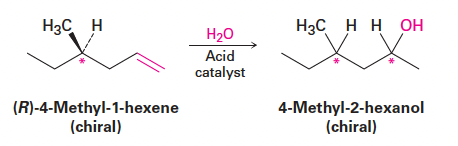
2. C4 입체화학은 변화하지 않음
- C4는 반응의 attack site가 아니므로 입체화학적 변화 없음.
- 따라서 출발물질이 (R)-C4이면 생성물도 C4 = R 유지.
3. C2 카보양이온의 비대칭성으로 인한 불균등 생성
- Markovnikov protonation 후 C2에서 카보양이온 생성.
- 그러나 출발물질이 키랄이므로 이 카보양이온 자체도 카이랄(비대칭).
- 두 면(top/bottom)의 접근 가능성이 동일하지 않음 → 불균등한 비율의 두 diastereomer 생성.
- 생성물: (2S,4R)-4-methyl-2-hexanol, (2R,4R)-4-methyl-2-hexanol
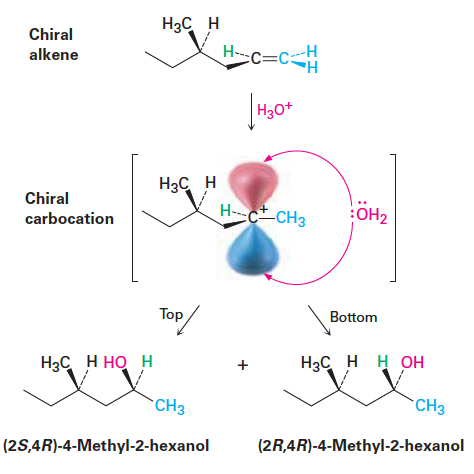
- 생성된 혼합물의 광학적 특성
- 출발물질이 하나의 enantiomer (R) → 결과 혼합물은 광학활성.
Problem 8-20. What products are formed from acid-catalyzed hydration of racemic (±)-4-methyl-1-hexene? What can you say about the relative amounts of the products? Is the product mixture optically active?
Answer.
(2S,4R)-4-methyl-2-hexanol
(2R,4R)-4-methyl-2-hexanol
두 diastereomer가 생성되지만, 출발물이 (±)이므로 거울상 세트까지 포함한 전체 혼합물은 광학비활성임.
Problem 8-21. What products are formed from hydration of 4-methylcyclopentene? What can you say about the relative amounts of the products?
Answer.
두 개의 diastereomer 생성되며, 비대칭 환경 영향으로 동일 비율이 아니라 불균등하게 생성됨.
반응형